
Music Theory
Learning music theory alongside your instrument helps you understand not just how to play music, but why it works.
It makes reading music easier, improves rhythm and listening skills, and helps you recognise patterns, scales, chords and musical structures. With a good understanding of theory, students become more confident and independent musicians, able to learn new pieces more easily and express themselves with greater understanding.
Music theory doesn't have to be complicated—it is simply a way of understanding the language of music.
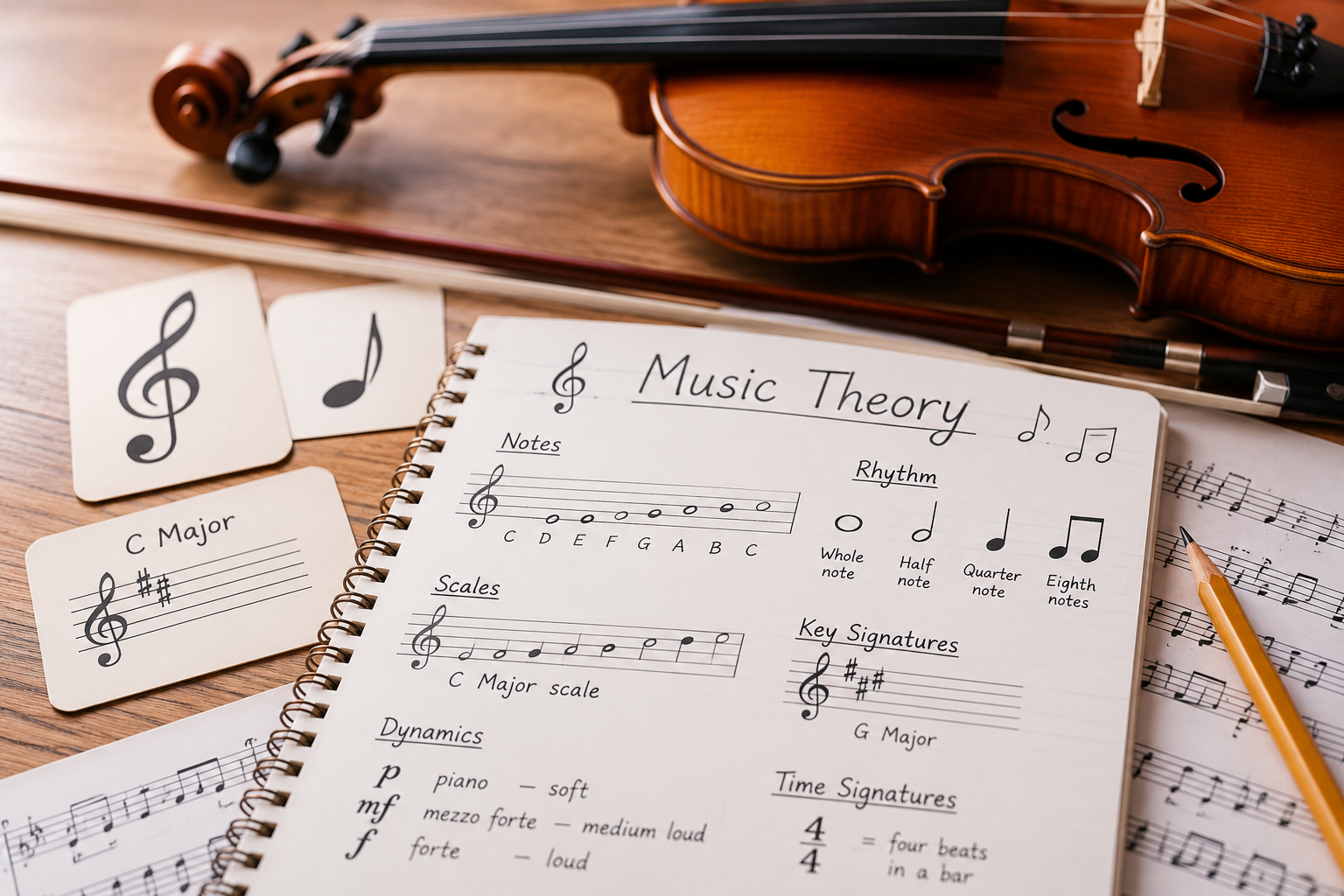
What's involved in music theory?
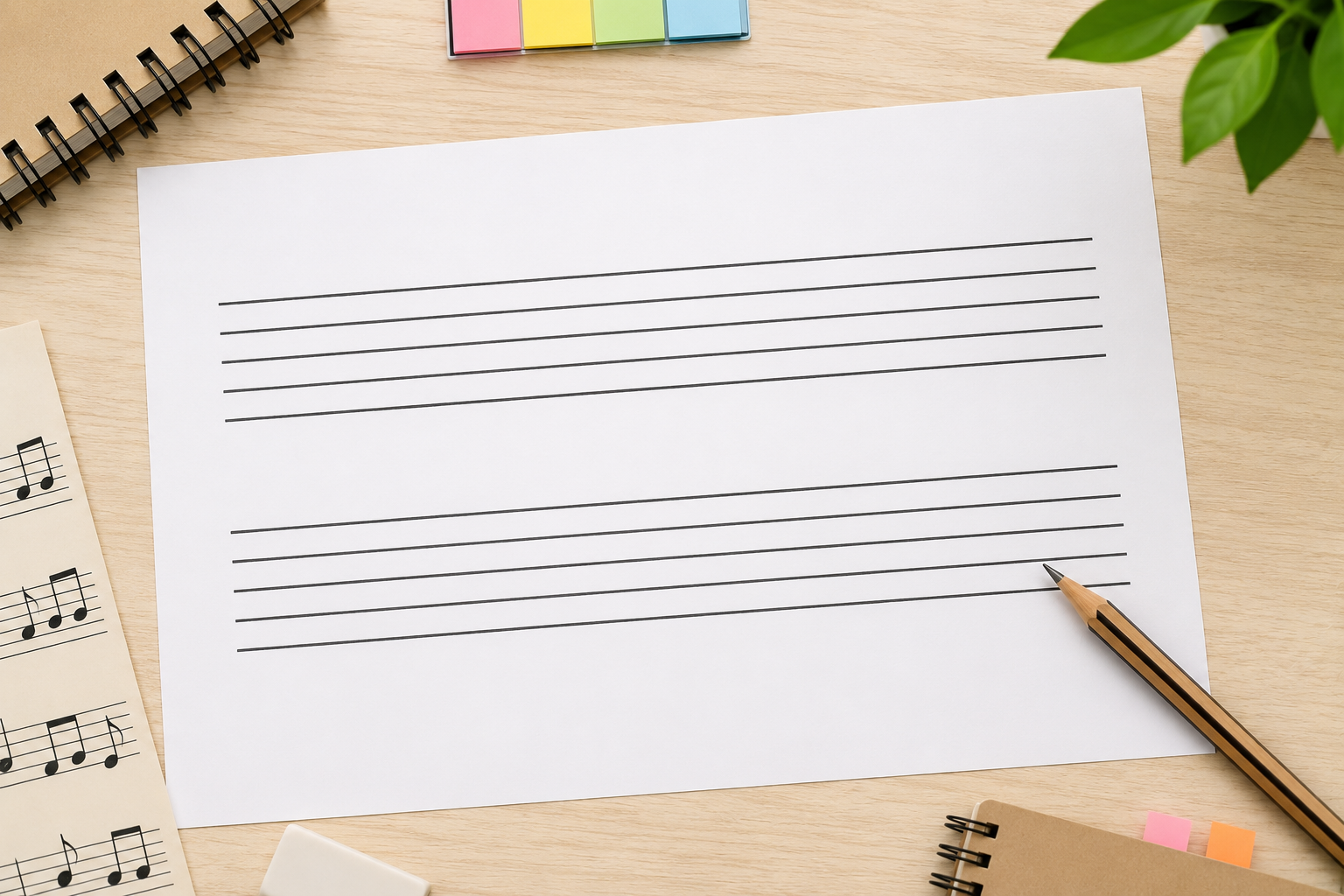
Staff notation
Staff notation is a clear system for writing music. Five lines and four spaces show the pitch of notes, while symbols communicate rhythm and expression. Learning to read notation helps musicians learn and perform music confidently and accurately.
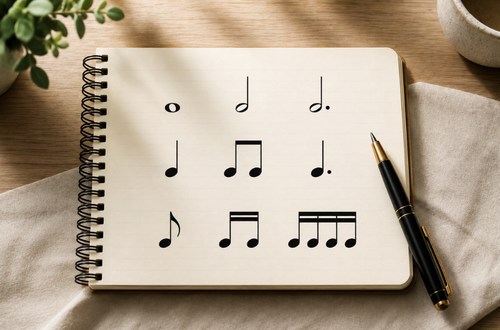
Note Values
Note values tell us how long each note is held in music. Understanding whole, half, quarter, eighth and sixteenth notes helps musicians develop accurate rhythm, timing and coordination, making it easier to read and perform music confidently.

Rhythm
Rhythm is the pattern of sounds and silences in music. Learning rhythm helps musicians develop a strong sense of timing, coordination and musical expression, allowing them to play confidently, stay together with others and bring music to life.
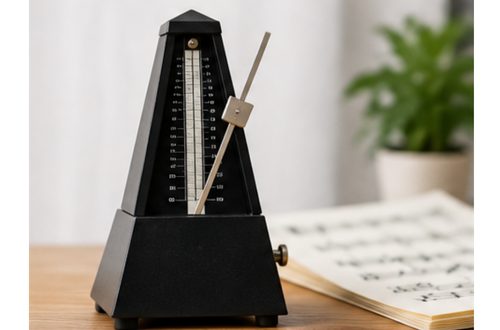
Tempo
Tempo describes the speed of a piece of music. Learning to recognise and control tempo helps musicians play with consistency, confidence and expression, while developing a strong sense of timing and musical awareness.
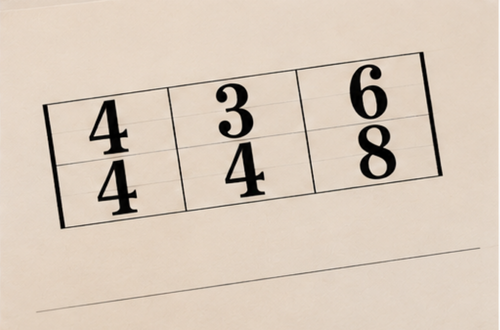
Time Signature
A time signature tells musicians how beats are organised within each bar of music. Understanding time signatures helps develop a strong sense of rhythm, making it easier to count, read and perform music accurately.
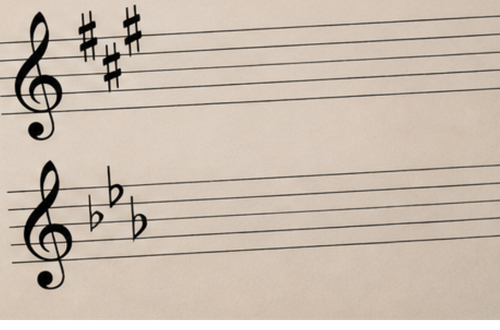
Key signature
A key signature shows which notes are sharp or flat throughout a piece of music. Understanding key signatures helps musicians recognise the key, read music more easily and play melodies with greater confidence and also helps with improvisation.
Violin from A-Z
Free learning book
I’ve created a comprehensive music book designed to guide students through their musical journey from the very beginning. It brings together everything they need to understand music theory and develop strong violin-playing skills in one clear and easy-to-follow resource.
From learning notes, the staff and spacing, rhythm and timing, to correct finger positions, bowing techniques and reading music, each topic is introduced step by step. The book is designed to build confidence gradually, helping students understand not just how to play the violin, but how music works.