
Why is music important in your child's development?
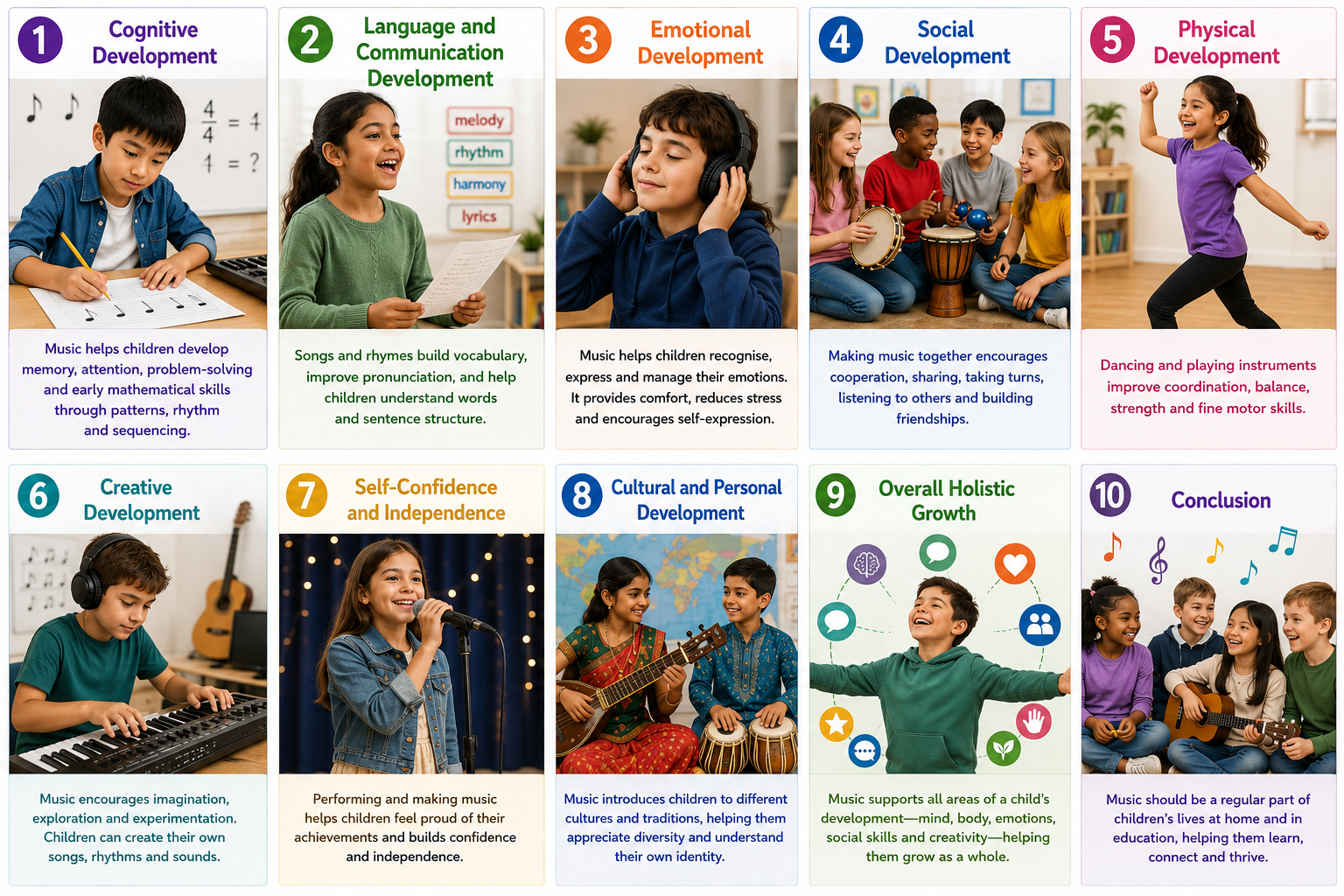
Cognitive Development
Music can support children’s thinking and learning skills. When children learn songs, rhythms, or simple musical patterns, they practise memory, attention, concentration, and problem-solving. Learning to recognise patterns in music can also help children develop early mathematical skills because they begin to understand concepts such as counting, sequencing, repetition, and timing. Musical activities encourage children to listen carefully and remember information, which can support learning in other areas.
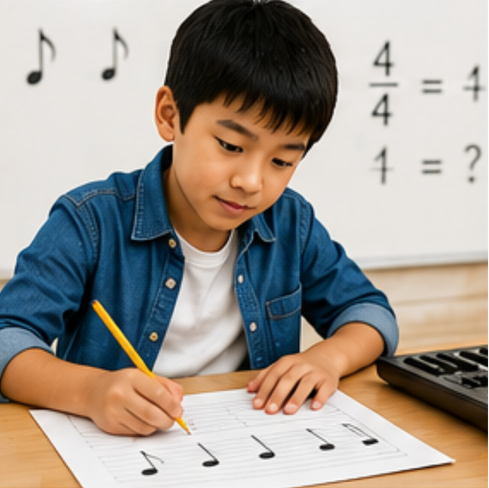
Language and Communication Development
Songs and rhymes are particularly useful for developing language skills. Children hear new words, practise pronunciation, and learn how words can be combined to create sentences. Repetition in songs helps children remember vocabulary and develop their ability to communicate. Nursery rhymes can also help children recognise sounds and rhythms in language, which supports early literacy and reading development.
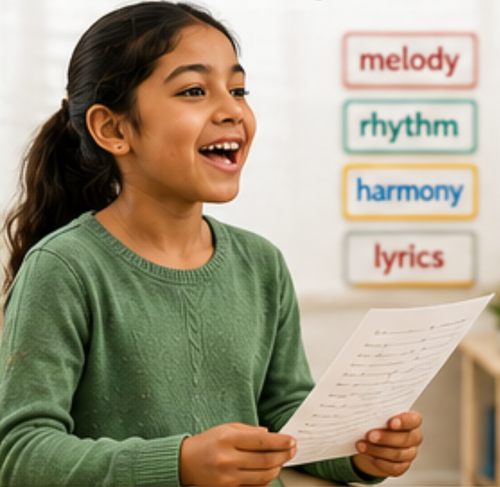
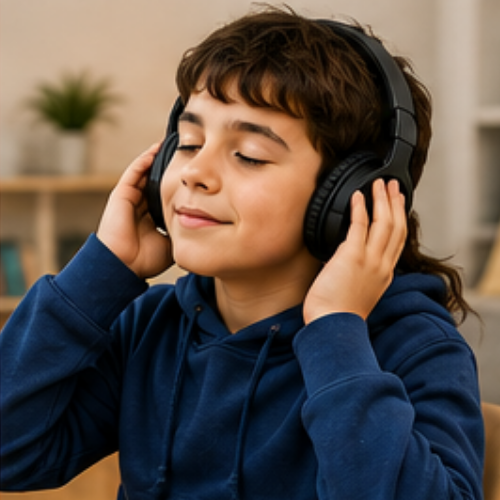
Emotional Development
Music gives children a safe way to recognise and express their emotions. Different types of music can help children communicate feelings such as happiness, excitement, sadness, or calmness. Singing or listening to music can also help children relax and manage their emotions. When children create their own music, they can express thoughts and feelings that they may find difficult to communicate through words.
Social Development
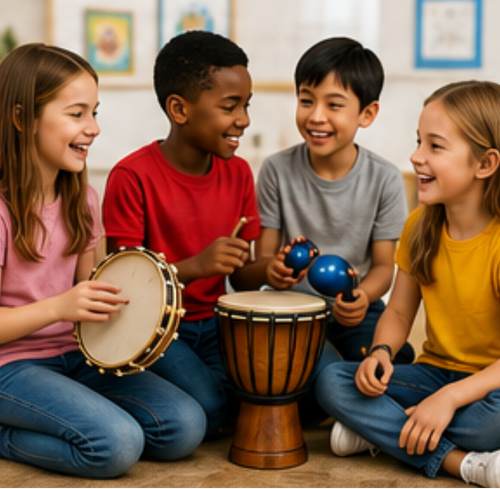
Music provides many opportunities for children to interact with others. Group singing, dancing, and playing instruments encourage children to cooperate, share, take turns, and listen to one another. Making music together helps children develop a sense of belonging and teaches them how to work as part of a group. Participating in musical activities can also build confidence and help children form friendships.
Physical Development
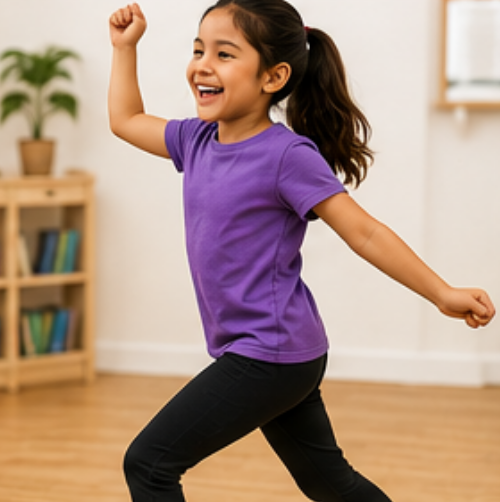
Musical activities can contribute to children’s physical development. Dancing, clapping, moving to a beat, and playing instruments encourage children to use both large and small muscle movements. For example, dancing can develop balance, coordination, and body control, while playing simple instruments can improve fine motor skills and hand-eye coordination. Music can therefore make physical activity enjoyable and engaging.
Creative Development
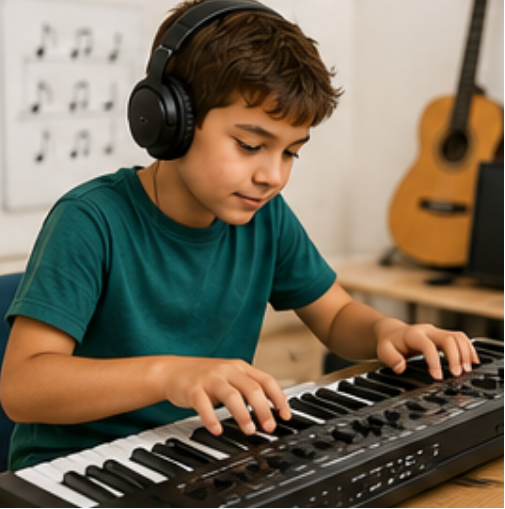
Music encourages children to use their imagination and creativity. Children can experiment with sounds, create rhythms, invent songs, and explore different instruments. There is often no single correct way to make music, which allows children to make choices and develop their own ideas. This encourages curiosity, experimentation, and creative thinking.
Self-Confidence and Independence
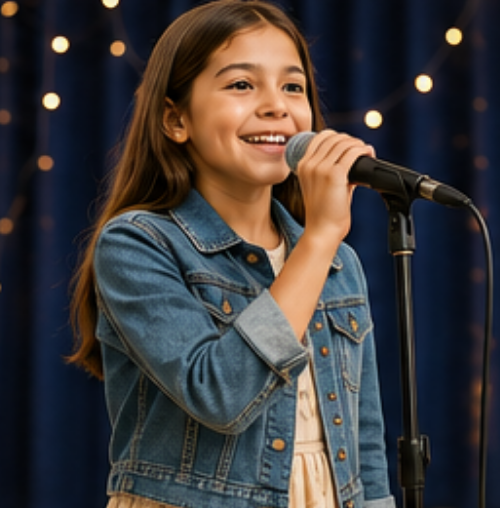
Music gives children a safe way to recognise and express their emotions. Different types of music can help children communicate feelings such as happiness, excitement, sadness, or calmness. Singing or listening to music can also help children relax and manage their emotions. When children create their own music, they can express thoughts and feelings that they may find difficult to communicate through words.
Cultural and Personal Development
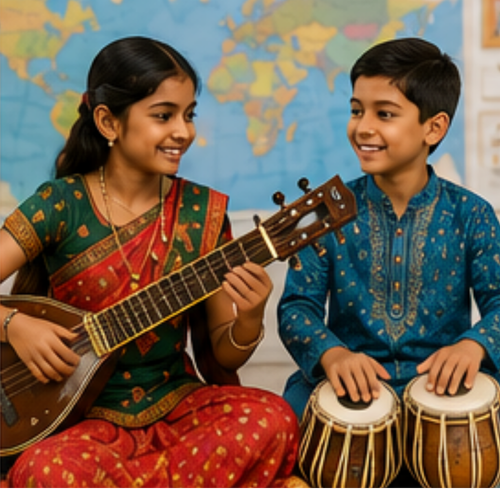
Music introduces children to different cultures, traditions, languages, and ways of life. Listening to music from different communities can help children appreciate diversity and develop respect for other people. Music can also help children understand and celebrate their own family and cultural backgrounds, contributing to their sense of identity.
Overall Holistic Growth
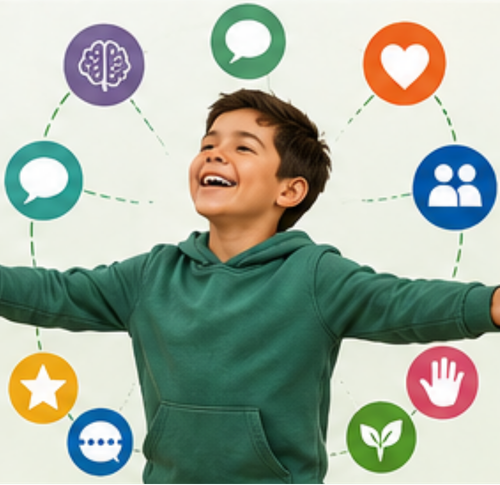
Music supports holistic child development by strengthening learning, memory, language, emotions, physical coordination, social skills, creativity, and confidence. Through singing, dancing, listening, and playing instruments, children learn to express themselves, cooperate with others, solve problems, and develop independence. Music also introduces children to different cultures and helps them grow into well-rounded individuals.
Conclusion
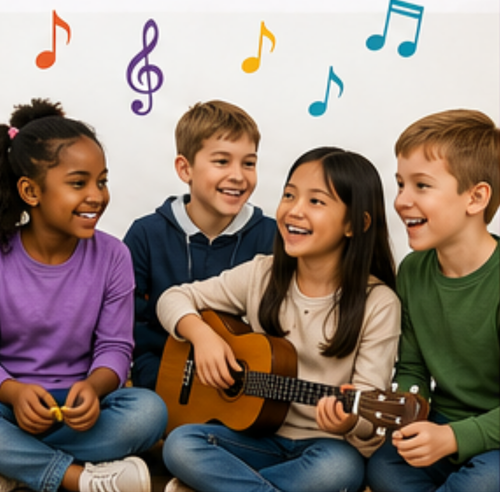
Overall, music is important in child development because it supports the child as a whole. It can strengthen thinking and memory, develop language and communication, encourage emotional expression, build social skills, improve physical coordination, and stimulate creativity. Music also helps children develop confidence, independence, and an appreciation of different cultures. For these reasons, music should be a regular part of children’s everyday experiences, both at home and in educational settings.